Connected infrastructure starts here: The role of IoT
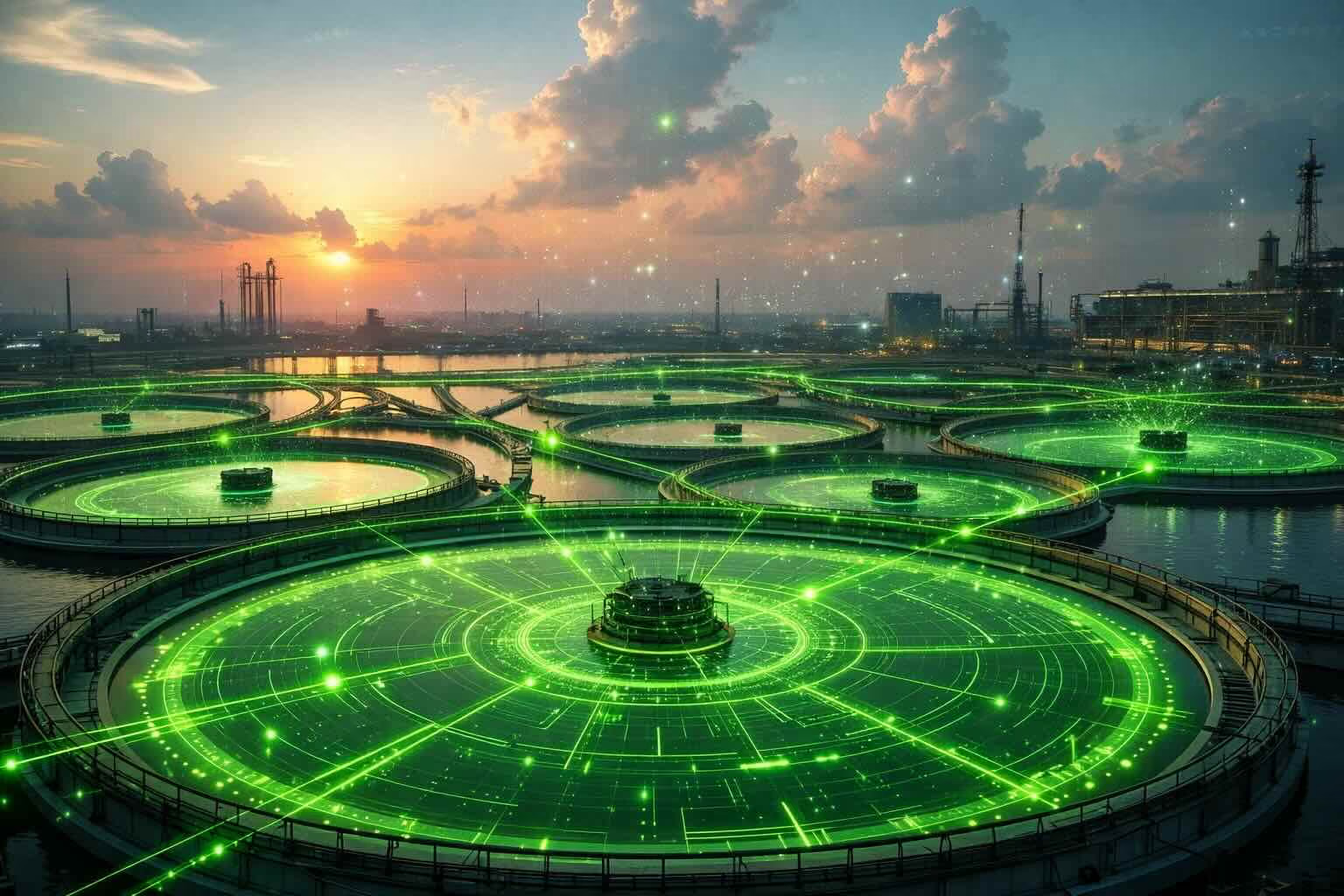

The conversation around infrastructure is shifting again.
As water, gas, and electricity networks become more complex, more distributed and more critical, the pressure on operators is increasing. Not just to maintain assets, but to understand what’s happening across their network in real time and respond accordingly.
That shift starts with connection.
IoT plays a critical role here - not as a standalone solution, but as the integrated layer that brings infrastructure into view, connecting assets, systems, and environments so they can operate as one.
For utilities and infrastructure operators, the value is clear: near real-time visibility that enables faster decisions, earlier intervention and more resilient operations.
The Visibility Gap Between Inspection and Insight
Despite advances in technology, much of infrastructure still operates with limited visibility.
Critical assets are often remote, underground, or difficult to access. They face long gaps between inspection cycles, during these gaps, data is either unavailable or arrives too late to influence outcomes.
This creates a familiar pattern:
- Issues go undetected until failure
- Maintenance becomes reactive
- Risk and cost increase over time
Even where data is being collected, it is often fragmented across systems and missing context.
As networks become more dynamic, this lack of continuous visibility becomes a defining challenge.
From Intermittent Data to Continuous Awareness
nxzen’s IoT offering changes this model.
By capturing live data from assets and environments, it introduces continuous monitoring across the network. What was previously hidden between inspections becomes visible in real time.
This is about timely, trusted insight.
Infrastructure moves from being periodically understood to continuously observed, allowing operators to identify changes, anomalies and emerging risks as they happen.
Making the Network Visible
The real impact of IoT is not in the sensors themselves, but in how the data is brought together.
When data is standardised, connected and integrated across systems, it creates a single, real-time view of the network - one that reflects both asset condition and environmental context.
This is where visibility shifts:
- From isolated data points to network-wide understanding
- From delayed reporting to live situational awareness
- From uncertainty to clarity
For the first time operators can see the network as it is, not as it was.
nxzen’s data and device management layer N-hub, standardises and contextualises data from any device with any communications protocol. This allows operators to always have confidence by knowing the data is precise and relevant to their organisation.
From Visibility to Action
Visibility alone is not enough. The value comes from what it enables.
When IoT data is integrated into operational systems, it begins to shape how decisions are made—supporting earlier detection, faster response and more coordinated action.
Teams can move from reacting to faults to anticipating and addressing them before they escalate. Alerts trigger workflows. Data informs prioritisation. Responses become coordinated rather than fragmented.
This is where infrastructure starts to shift:
- From reactive maintenance to proactive operations
- From manual intervention to data-driven action
- From delayed response to real-time decision-making
The result is not just better information, but better outcomes.
Breaking Silos Across the Network
For utilities, this shift is increasingly important.
Energy systems are becoming more decentralised, more dynamic and more interconnected. But many still operate in silos across assets, systems, and teams.
IoT helps close these gaps by creating a shared, real-time data layer across the network, enabling a more joined-up way of working.
Instead of fragmented views, operators gain a coherent understanding of the entire system. Instead of isolated responses, they can coordinate across the network.
This is how utilities begin to operate as integrated systems rather than segmented functions.
Strengthening Resilience Through Real-Time Insight
Resilience is no longer just about recovery. It’s about readiness.
In an environment defined by disruption - whether from weather, demand shifts or operational pressures - operators need to see issues as they emerge and act quickly.
IoT supports this by providing:
- Early visibility of changing conditions
- Continuous awareness during incidents
- Faster identification and resolution of faults
This enables a shift from reacting after the fact to anticipating and managing disruption as it unfolds.
A Critical Layer in Intelligent Infrastructure
IoT is not the complete answer to intelligent infrastructure, but it is essential.
It provides the real-time data layer that enables broader capabilities to function, from advanced analytics and automation to modelling and optimisation.
Without connected near real-time data and context, these capabilities lack relevance.
IoT ensures that infrastructure is connected, visible and able to respond, enabling intelligence to develop across the wider system.
Building for Scale and Operational Impact
The challenge for many organisations is no longer adopting IoT, but making it work in practice.
Delivering real value requires integration, scale and operational alignment. Data must flow into core systems. Insights must trigger action. Technologies must support real-world workflows.
This is where nxzen’s IoT offering moves beyond deployment and becomes a true operational capability.
Turning Real-Time Data into Action
At nxzen, IoT is delivered as an integrated, end-to-end capability by connecting, managing, and activating data across the infrastructure lifecycle.
The focus is simple: turn real-time asset and environmental data into decisions and action.
By linking devices, networks and systems, and embedding insight into operations, we help organisations move from visibility to meaningful, measurable impact.
The Future Starts with Connection
Infrastructure is becoming more connected, more complex, and more critical.
But connection alone is not the goal, it’s the starting point.
When assets, systems and environments are brought together into a real-time operational layer, organisations gain the clarity needed to act with confidence.
From there, intelligence can follow.
Because intelligent infrastructure isn’t built in isolation. It’s built on connected systems that can be seen, understood and acted on at network scale.
Let’s solve your operational challenges together