Accelerating Tasmania’s climate resilience and transformation with a first-of-its-kind digital twin

The numbers
The problem
Tasmania required an innovative digital partner to enhance its ability to respond to natural disasters and accelerate its shift toward a smarter, more connected future.
Achieving this required overcoming long-standing challenges:
- Fragmented legacy systems with limited asset visibility
- Increasing climate-related risks such as bushfires, flooding, and vegetation encroachment
- Siloed data that made strategic planning slower and less reliable
- The need for a scalable platform that could support cross-sector innovation
To build a future-ready state, Tasmania needed a unified digital environment. A platform that connects real-time infrastructure, environmental, and operational insights to improve community resilience and support economic growth.
The approach
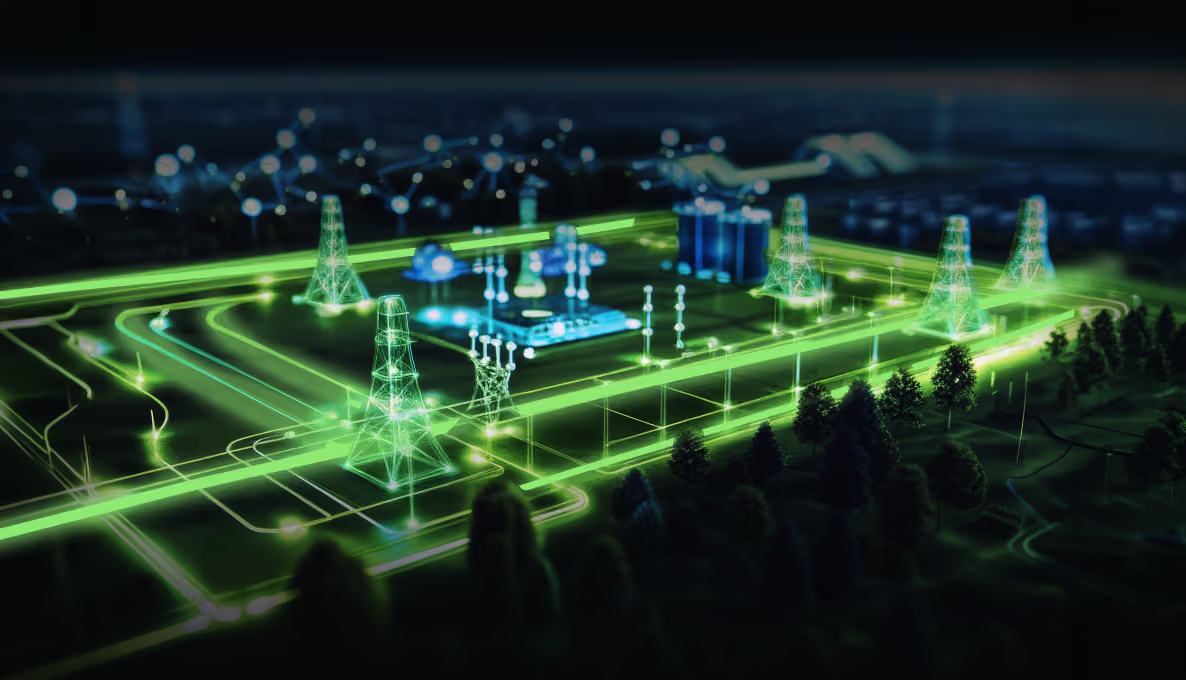
Through our joint venture Virtual Tas, nxzen, in partnership with Tas Networks, has delivered a high‑resolution digital twin of the entire state, powered by our Digital Reality Platform.
The approach integrated:
- LIDAR, satellite, and aerial imaging for precise environment and asset capture
- Big data modelling, IoT, and real-time sensor networks to provide dynamic insights
- AI-driven analytics to identify risks, optimise network performance, and support long-term planning
Working in partnership with Tasmanian stakeholders, nxzen ensured the platform became a core operational capability, not just a one-off technology deployment.
The result is a living digital ecosystem that supports smarter decision making, stronger visibility, and improved state resilience.
The outcomes
The digital twin has become a foundational capability for Tasmania, giving authorities, utilities, and infrastructure providers real-time insights into the state's built and natural environments. This unified view is enabling:
- Statewide operational visibility. Network operators and government agencies now have a single source of truth for all above-ground assets.
- Improved climate resilience. From better vegetation insights to early-warning indicators and faster responses to bushfires and flooding.
- A stronger digital economy. Several industries now utilise the digital twin for modelling, design, and environmental intelligence.
- Next-generation agriculture. Smarter, more sustainable vegetation management, biodiversity insights, and risk mitigation.
- A repeatable model. Scalable deployment across other Australian states and global regions seeking to transform how they manage infrastructure and natural environments.
The results
- Faster, more informed decision-making for infrastructure, land, and environmental management
- Enhanced safety and operational efficiency across Tasmania's critical infrastructure, government bodies, and emergency services
- A long-term, scalable digital foundation supporting the state's transition to a smarter, more sustainable future